Tobacco: a tale of two London conferences.
Posted In: News
The 21st century has not a started on a happy note for tobacco fiends. On the one hand, the political ascendance of the control advocates, a coalition of charities, research bodies, public health institutes and international agencies, has declared tobacco an enemy of health and wellbeing. On the other, the market is moving to synthetic nicotine products and ever more sophisticated delivery mechanisms. The rapid evolution of vaping devices over the past 20 years has rendered notions like aroma, the exotic appeal of producer countries or ancient customs quaintly archaic. Today’s discussion is about flavours, not leaf.
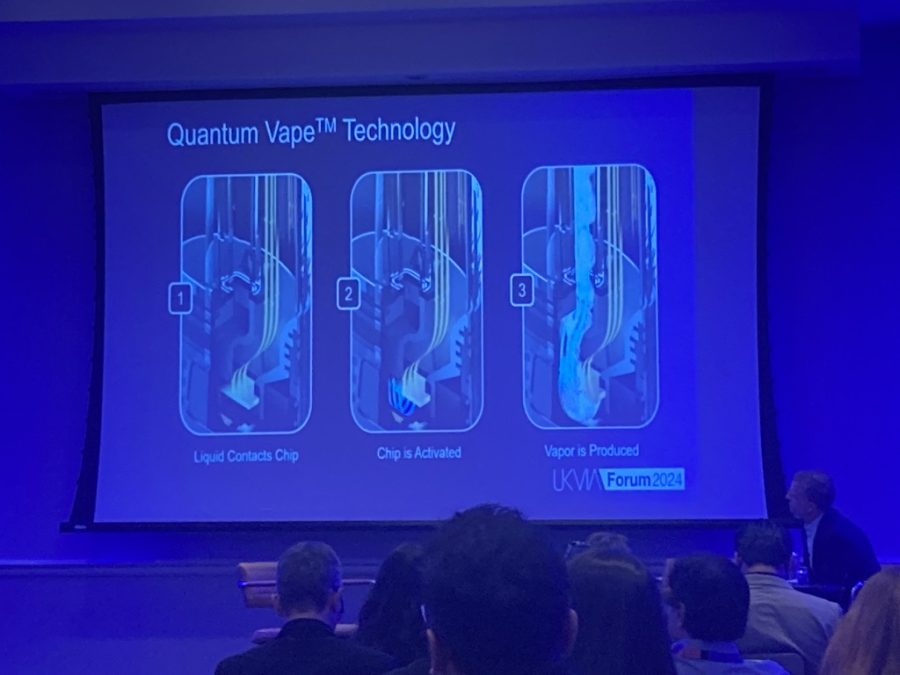
For the tobacco industry the technical transition is well underway, they are producing different delivery mechanisms, from electronic cigarettes, to ‘heat not burn’ devices, to pouches – a revival of chewing tobacco. There are start-ups promising paradigm shifting technologies, as well as the large incumbents best placed by scale, infrastructure and connectivity to weather the regulatory storms. With them stand the bands of vapers who inject authenticity, the voice from below and a sense of enthusiasm to the field. For participants at the meeting of the UK Vaping Industry Association on 15 November, in the London Marriot, tobacco/nicotine was a source of profit and pleasure. They came to learn how best to adapt to the regulatory measures deriving from the newly passed Tobacco and Vapes Bill, when making a living or enjoying a habit. It was very much about them.
On 05 December attendants of the Electronic Cigarette Summit at the Royal College of Physicians on the other side of Regents Park, were told by the chair in her so-called welcoming remarks that cigarettes were the “most deadly commodity on the planet” and if you did not want to eliminate smoking than “you shouldn’t be here”. Interestingly, then, for a meeting frontloaded with academic presentations, discussion was precluded from the get-go. Tobacco/nicotine were framed as a source of harm that is to be eliminated. The meeting was very much about others.
Three groups in particular, tobacco consumers, the tobacco industry and young people, with a communication protocol for each. Consumers of tobacco are exhorted to stop smoking, and vaping is tolerated as a cessation technique. The tobacco industry is shunned as morally reprehensible and untrustworthy (though they are allowed to attend as paying guests). Young people are told not to
With the ground rules agreed, principles defined, dissent ruled out, the purpose of the meeting is a touch unclear. The first keynote speaker praises the benefits of harm reduction. Subsequent presentations on trends inform us that UK tobacco use continues to fall while vaping is increasing. Some groups are more resistant to smoking cessation. Public perceptions of harm and benefits of different delivery devices are at variance from those of the tobacco control community. But this is the 12th annual summit, and all this has been heard before.
A meeting where three different presenters show the identical slide is not on the cutting edge of research or anything. At least the presentations from the Office of Standards and the Medicines and Health products Regulatory Authority opened a narrow window of uncertainty. Some products are difficult to classify in fast-moving markets, and enforcement is subject to the funding allocation set by local government. Stale is the debate where government agencies provide the excitement.
Not that research data held no promise. What do increases in cigar consumption noted by the UCL ‘Smoking Toolkit Study’ suggest about consumer empowerment and social identity? How does the reported rise in episodic smoking sit with established models of nicotine addiction? Tobacco Control, however, is not interested in social or cultural phenomenon around tobacco use, is not interested really, in people, other than as a health problem. Either to themselves, or, via ‘second hand smoke’ or ‘health costs’ to society.
The purpose of the summit, then, was not discussing how best to balance the pains and pleasures that people gain from tobacco, nor the presentation of new insights or products. It was a community that came together to affirm a shared faith and repudiation of the enemy. Perhaps confirmation is needed after the fire of tobacco activists struggling half a century ago has cooled into the ruling dogma of an established religion?
At a time when it is increasingly clear that ‘the tobacco industry’ is not a suitable category for all the economic interests involved across the commodity chain from farmer to consumer, the notion Tobacco Control Community is perhaps equally at risk of artificially homogenising a diverse set of players. But there seem to be interlocking connections between government department awarding money to charities to commission researchers, who advise governments to implement policies that are pushed for by the charities.
The cohesion of coalition is under stress over how to respond to the electronic devices. Though in spite of consisted attempts the search for harmful effects has so far failed, they are regarded with continued suspicion and hostility. The problem for a movement that was built on the basis of ‘evidence’ is that the ban on electronic devices cannot be justified on anything other than antipathy to tobacco and the makers of tobacco products.
It signals that tobacco control has assumed in 2020s a similar role to the tobacco industry on the 1970s. Pursuing interventions in the lives of people that are in denial of evidence and motivated by self interest and ideology.
Related Posts
The ‘Drugs Omnibus Resolution’ at the UN – a charter for persecution
In a parallel universe a few hundred political appointees gather at a prestigious venue to decide on how to arrest and incarcerate law abiding citizens by declaring the consumption of certain plants as illegal. yet this is precisely what occurred on Thursday 21st November 2024, at the Third Committee, Seventy-ninth
Problem generation. Says who?
There are two ways of accounting for the rise reported in the Economist on illegal substance use among the over 55s, both should give rise to concern. First, the demographic shift as another cohort growing up with a wider assortment of available substances are getting over the line. That they