The ‘Drugs Omnibus Resolution’ at the UN – a charter for persecution
Posted In: News
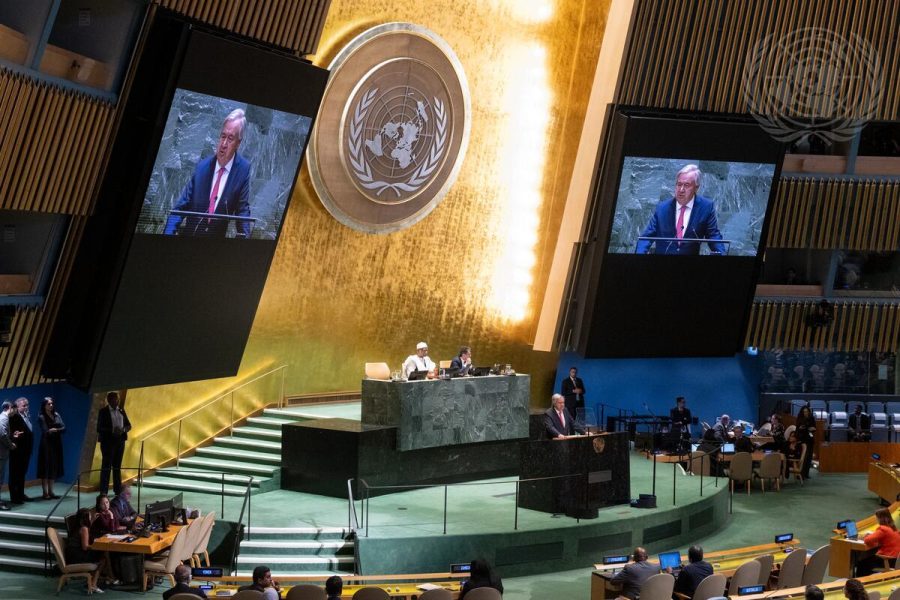
In a parallel universe a few hundred political appointees gather at a prestigious venue to decide on how to arrest and incarcerate law abiding citizens by declaring the consumption of certain plants as illegal. yet this is precisely what occurred on Thursday 21st November 2024, at the Third Committee, Seventy-ninth Session, of the UN General Assembly with the adoption of draft resolution A/C.3/79/L.6/Rev.1). The process resembles an institutional Don Quixote engaging tilting at the windmills of an imaginary enemy. At this meeting, the so-called ‘the global community’, shepherded into agreement by the sticks of sanction and carrots of development assistance by the major powers, agrees on a set of measures to:
“address and counter the world drug problem” (page7)
The remainder of the document contains so many qualification that naif readers are lost to what has been agreed at all. The devil, and we can smell the sulphur all over these publications, lies in the detail of phrasing and vocabulary.
When member states are encouraged to “to promote prevention, as part of a comprehensive and balanced strategy for drug demand reduction” this translates into programmes for ‘just say no’ or ‘talk to frank’ or ‘healthy lifestyle’ campaigns. The text also mentions programme beneficiaries who will be recipients of funds for such activities, such as United Nations Office on Drugs and Crime, the International Narcotics Control Board, and the World Health Organisation. Hard as it has been to wring concession to health, environment and other cuddly issues, with corresponding funding allocations, the crux of the resolution is on combating drug abuse and drug trafficking through enforcement. That is the use of state violence against people who have on them or are somehow related or connected to someone who has on them one of a list of plants and plant derived substances and their analogues.
it goes into detail in how the states signing up to this resolution are required to intrude into the lives of their citizens and override their rights over their bodies and their property by calling on member states to:
“promote the use of new technologies and means to counter illicit trafficking of narcotic drugs and psychotropic substances and their precursor chemicals, including through the darknet and the surface web and social networks, as well as to prevent the use of electronic payment systems and virtual assets, including those provided by virtual asset service providers” (p 12, para 27)
and to:
“prevent the illicit cultivation of and to eradicate plants containing narcotic and psychotropic substances”
It further demands in the application of proportionate penalties including incarceration and cooperation between and among states. The full details of this cheery document can be found on
https://documents.un.org/doc/undoc/ltd/n24/344/48/pdf/n2434448.pd
Related Posts
Tobacco: a tale of two London conferences.
The 21st century has not a started on a happy note for tobacco fiends. On the one hand, the political ascendance of the control advocates, a coalition of charities, research bodies, public health institutes and international agencies, has declared tobacco an enemy of health and wellbeing. On the other, the
Problem generation. Says who?
There are two ways of accounting for the rise reported in the Economist on illegal substance use among the over 55s, both should give rise to concern. First, the demographic shift as another cohort growing up with a wider assortment of available substances are getting over the line. That they